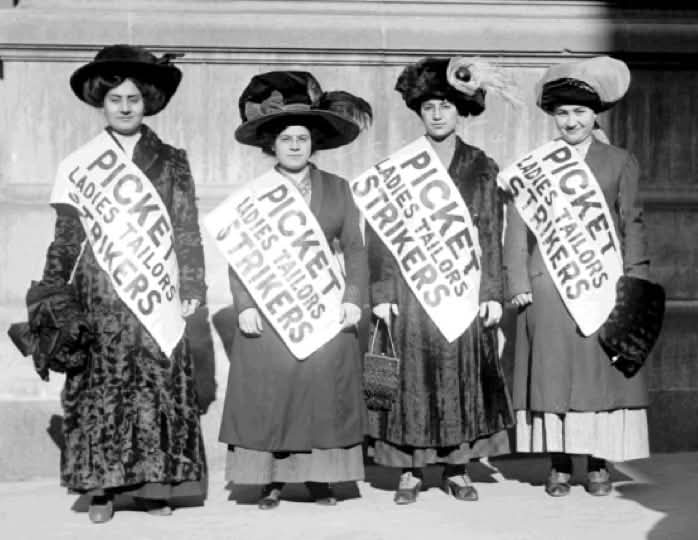
For generations, sewing was a skill passed from mother to daughter—until industrialists such as Francis Cabot Lowell, Nathan Appleton, and Patrick Tracy Jackson saw the possibilities of turning women’s mastery of sewing and textiles into an industry. It depended heavily on their skilled labor, but valued it cheaply. By the mid-1800s, seamstresses could work 16-hour days and still barely earn enough to live.
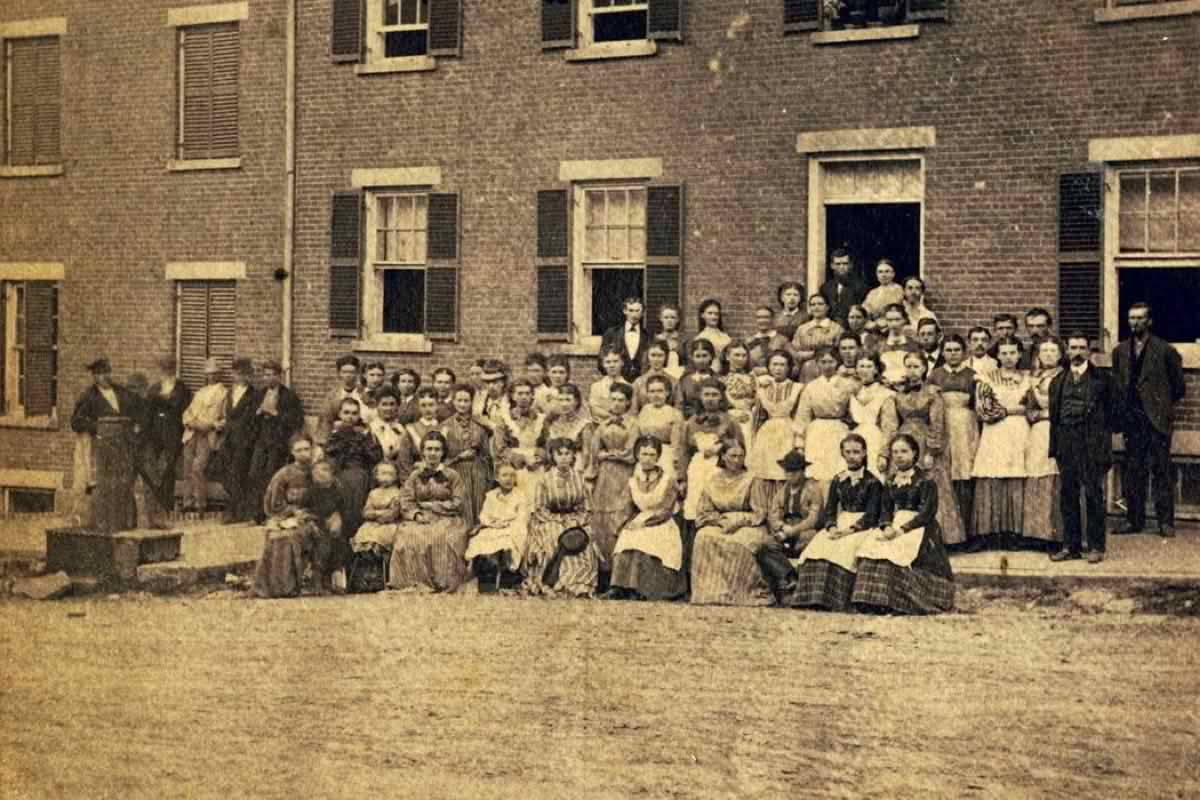
In Lowell, Massachusetts, the women who came to be known as the "Lowell Mill Girls" walked out, staging some of the first major women's labor strikes against wage cuts and grueling factory conditions. They organized themselves into the Factory Girls' Association, thousands strong—one of the first unions of working women in American history.
In Troy, New York, thousands of women worked as many as 14 hours a day producing the detachable collars and cuffs that defined American fashion. In 1864, one of them, Kate Mullany, helped organize some 300 women from 14 laundries and led them on strike.
Five and a half days later, they won a raise of 25 percent. Kate went on to build one of America's first enduring women's unions and, in 1868, became the first woman appointed to national union office. Her union joined the fight for the eight-hour day, helping turn women's highly skilled labor into the power to demand better wages, safer workplaces, time away from work and dignity in it.
Eighteen years after Kate’s strike, the first Labor Day was celebrated in New York in 1882, honoring a movement built by working people like her who demanded that their labor—and their lives—be valued.